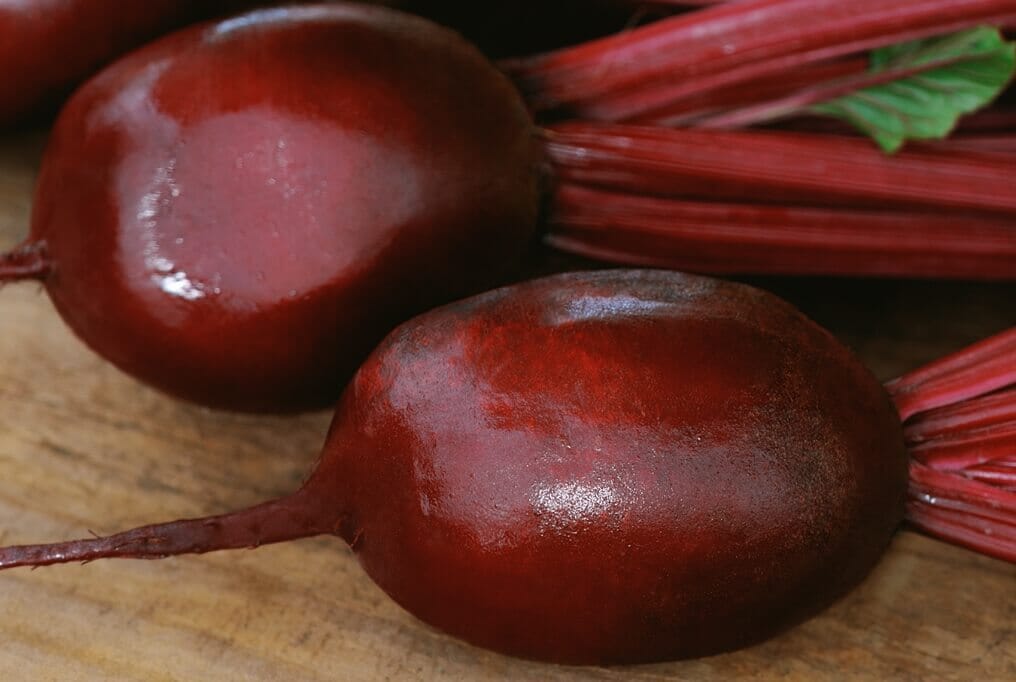
Vulture Hybrid Beet F1
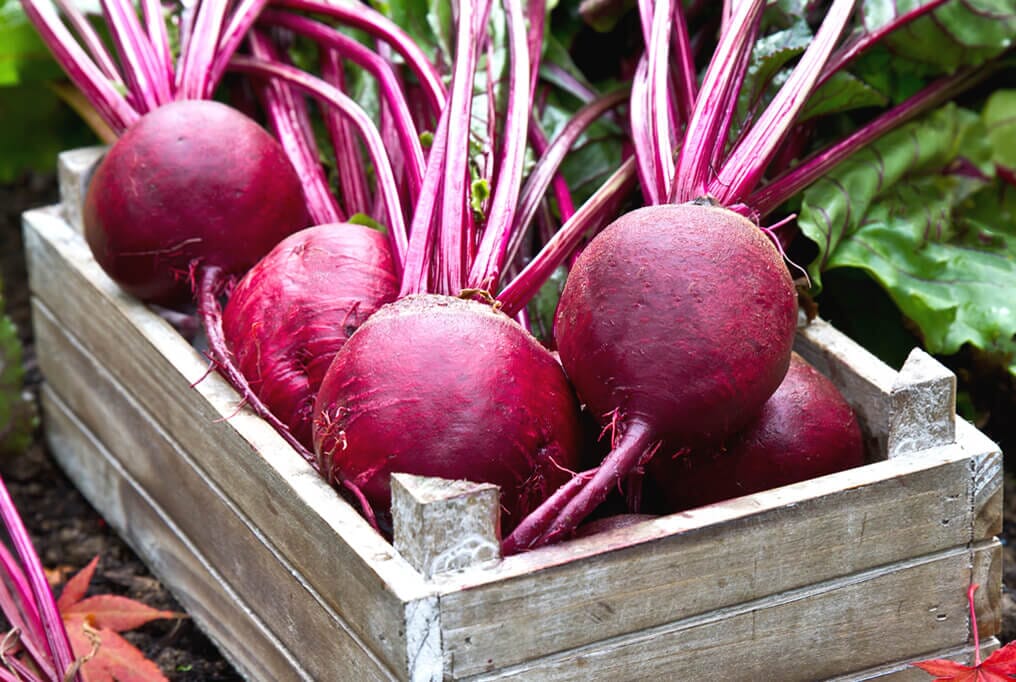
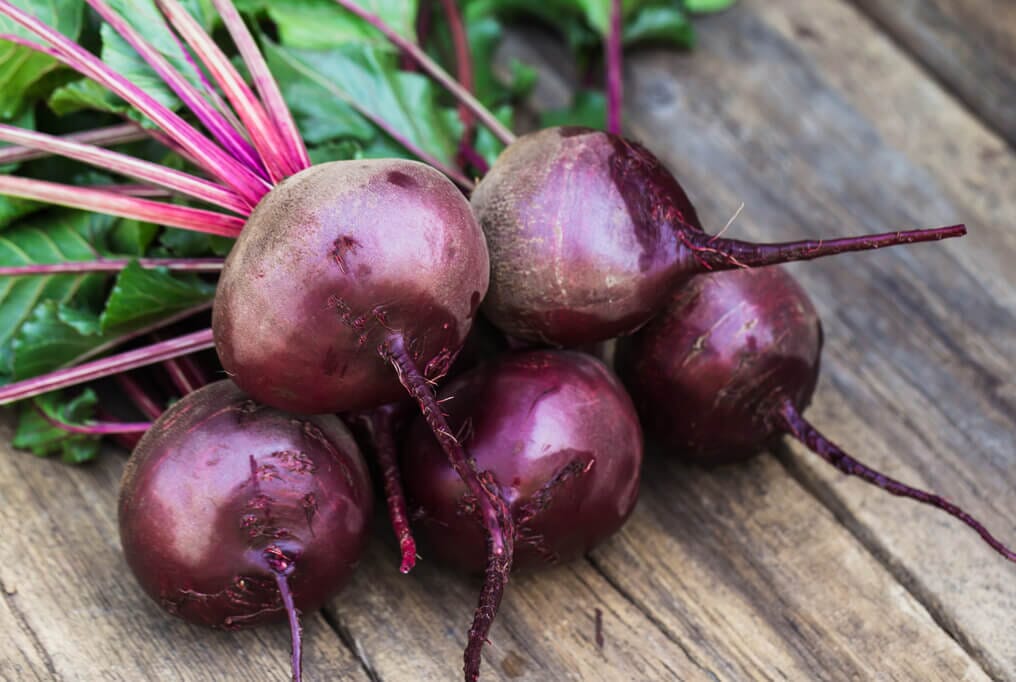
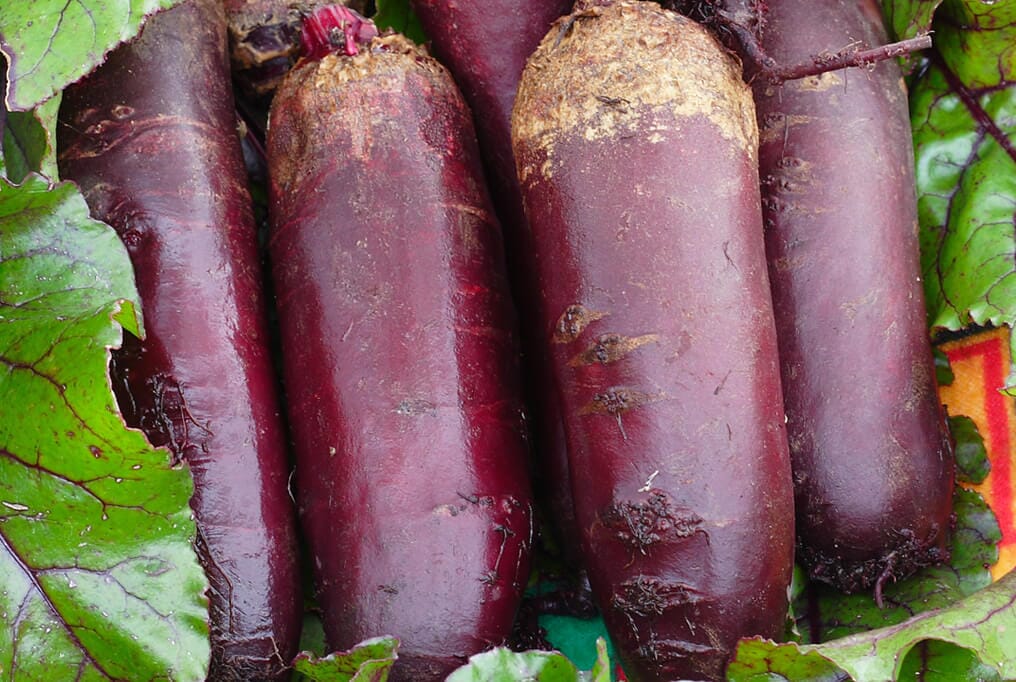
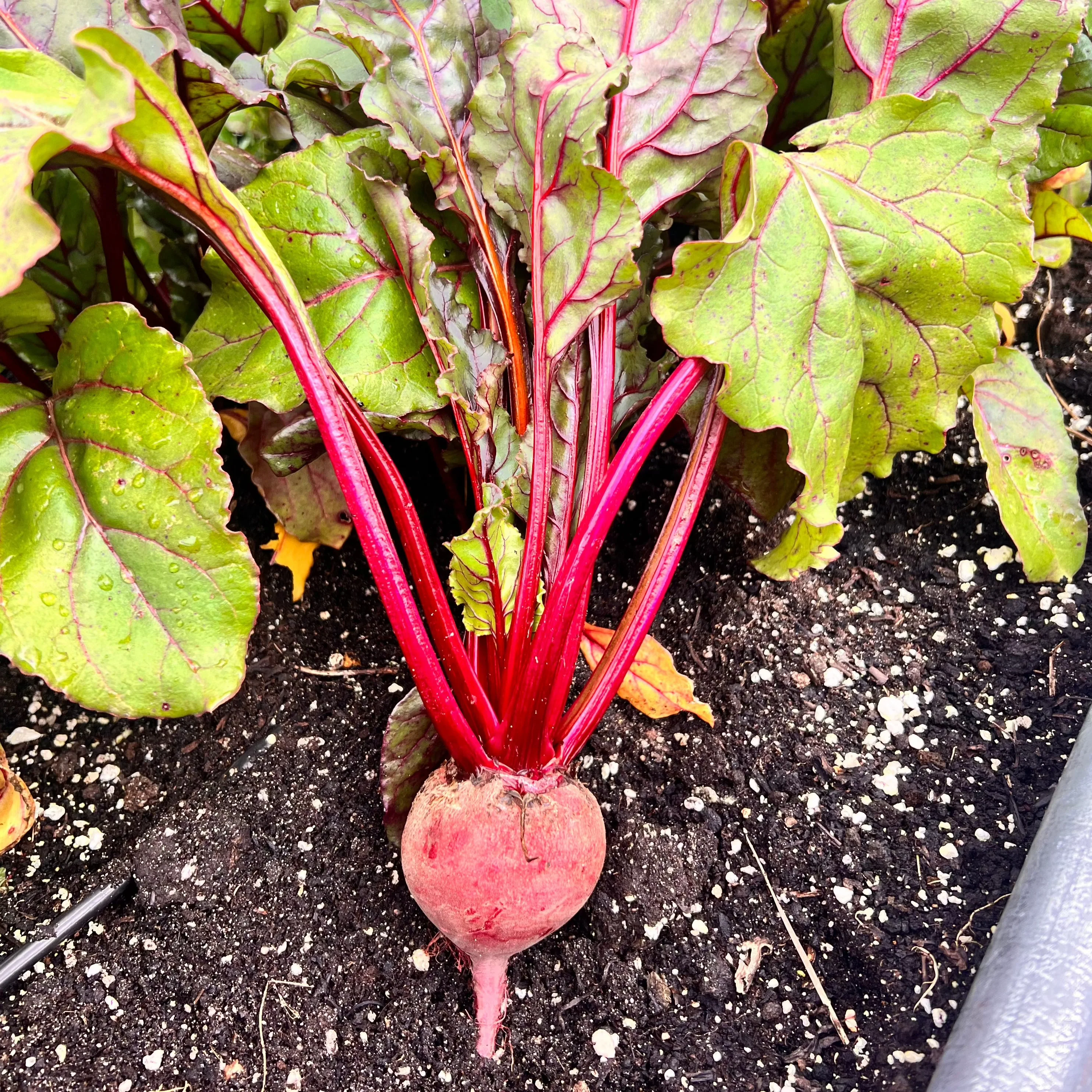
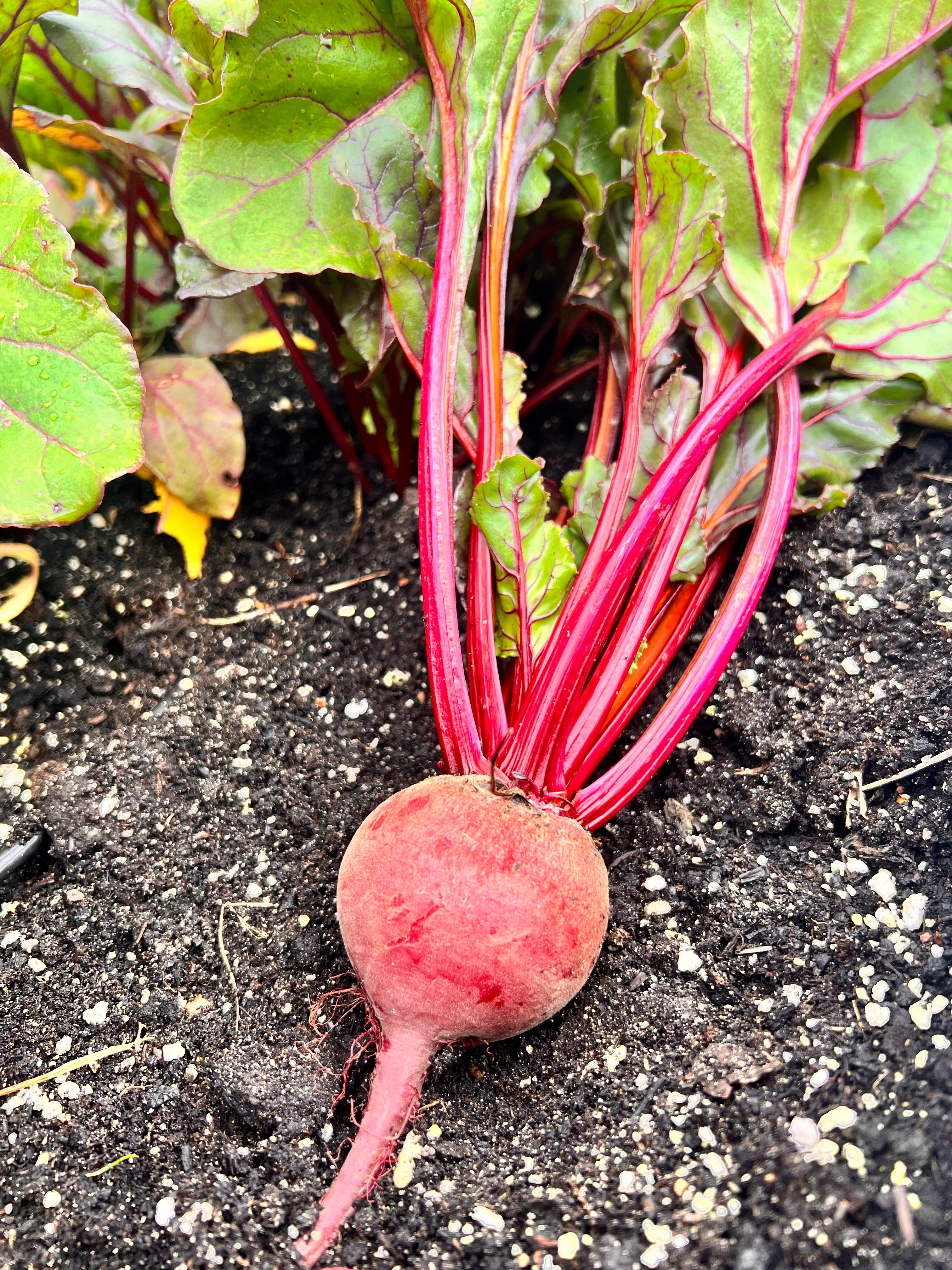
Vulture Beet is a new, hybrid beet with a half-long, cylindrical shape. These beets are elongated, but not to the extent of Cylindra. Cylindrical varieties produce larger beets and thus provide higher yields per square feet. This variety has excellent flavor compared to other cylindrical beet varieties.
Vulture Beets average 4-5" in length and 2" in diameter. They also have a smaller taproot and crown. This is a great variety for fresh market or for preserving through pickling or canning. The exceptional flavor also makes it a great option for fresh eating on salads or roasting in the oven.
Beets may be direct seeded or grown as transplants. Beet Seeds are naturally multigerm, which means that each seed will germinate 2-3 plants. As a result, plants will require thinning once they emerge from the soil. Failure to thin will result in overcrowding and lack of consistently sized roots. Plants should be thinned to one every 3-4″ along the row. Beets may be planted on a bed with multiple rows close together. Harvest beets when roots have reached 3-4″ in size. For storage, remove the greens and keep the roots in the refrigerator.
Growing beets from transplants is also an effective method, because thinning can be done in the trays as opposed to the ground. Place one seed per cell in our seed starting trays and thin to one plant per cell. Transplant when a solid root system has developed, when the plants can be easily pulled from the cells. Transplant into the ground at 4″ spacing along the row. Beets work great grown in double rows to maximize garden space. For double row planting, plant two rows 4″ apart with 3′ between double rows.
Vulture Beet Planting Information
Planting Method: transplant and direct seed
When to Plant: early spring and fall
Planting Depth: 1/2″
Seed Spacing: 4-6″
Row Spacing: 3′
Days to Maturity: 85
Disease Resistance: Scab, Cercospora
Vulture Beet is a new, hybrid beet with a half-long, cylindrical shape. These beets are elongated, but not to the extent of Cylindra. Cylindrical varieties produce larger beets and thus provide higher yields per square feet. This variety has excellent flavor compared to other cylindrical beet varieties.
Vulture Beets average 4-5" in length and 2" in diameter. They also have a smaller taproot and crown. This is a great variety for fresh market or for preserving through pickling or canning. The exceptional flavor also makes it a great option for fresh eating on salads or roasting in the oven.
Beets may be direct seeded or grown as transplants. Beet Seeds are naturally multigerm, which means that each seed will germinate 2-3 plants. As a result, plants will require thinning once they emerge from the soil. Failure to thin will result in overcrowding and lack of consistently sized roots. Plants should be thinned to one every 3-4″ along the row. Beets may be planted on a bed with multiple rows close together. Harvest beets when roots have reached 3-4″ in size. For storage, remove the greens and keep the roots in the refrigerator.
Growing beets from transplants is also an effective method, because thinning can be done in the trays as opposed to the ground. Place one seed per cell in our seed starting trays and thin to one plant per cell. Transplant when a solid root system has developed, when the plants can be easily pulled from the cells. Transplant into the ground at 4″ spacing along the row. Beets work great grown in double rows to maximize garden space. For double row planting, plant two rows 4″ apart with 3′ between double rows.
Vulture Beet Planting Information
Planting Method: transplant and direct seed
When to Plant: early spring and fall
Planting Depth: 1/2″
Seed Spacing: 4-6″
Row Spacing: 3′
Days to Maturity: 85
Disease Resistance: Scab, Cercospora
Original: $3.99
-70%$3.99
$1.20Description
Vulture Beet is a new, hybrid beet with a half-long, cylindrical shape. These beets are elongated, but not to the extent of Cylindra. Cylindrical varieties produce larger beets and thus provide higher yields per square feet. This variety has excellent flavor compared to other cylindrical beet varieties.
Vulture Beets average 4-5" in length and 2" in diameter. They also have a smaller taproot and crown. This is a great variety for fresh market or for preserving through pickling or canning. The exceptional flavor also makes it a great option for fresh eating on salads or roasting in the oven.
Beets may be direct seeded or grown as transplants. Beet Seeds are naturally multigerm, which means that each seed will germinate 2-3 plants. As a result, plants will require thinning once they emerge from the soil. Failure to thin will result in overcrowding and lack of consistently sized roots. Plants should be thinned to one every 3-4″ along the row. Beets may be planted on a bed with multiple rows close together. Harvest beets when roots have reached 3-4″ in size. For storage, remove the greens and keep the roots in the refrigerator.
Growing beets from transplants is also an effective method, because thinning can be done in the trays as opposed to the ground. Place one seed per cell in our seed starting trays and thin to one plant per cell. Transplant when a solid root system has developed, when the plants can be easily pulled from the cells. Transplant into the ground at 4″ spacing along the row. Beets work great grown in double rows to maximize garden space. For double row planting, plant two rows 4″ apart with 3′ between double rows.
Vulture Beet Planting Information
Planting Method: transplant and direct seed
When to Plant: early spring and fall
Planting Depth: 1/2″
Seed Spacing: 4-6″
Row Spacing: 3′
Days to Maturity: 85
Disease Resistance: Scab, Cercospora